Last Updated on July 10, 2026 by Practical Astrophotography Staff
Introduction: A Hobby That Demands Real Learning
Astrophotography has always occupied a unique space at the intersection of art and science. It demands technical precision, patience, and a willingness to learn concepts that span optics, atmospheric conditions, image acquisition, and complex post-processing workflows. For many beginners, the first instinct is to turn to the internet, searching for communities that promise guidance, feedback, and a sense of belonging. In theory, this should be the ideal pathway into the hobby. In practice, however, many of the most popular online spaces dedicated to astrophotography have drifted away from meaningful education and toward something far less useful.
The Promise and Reality of Facebook Groups
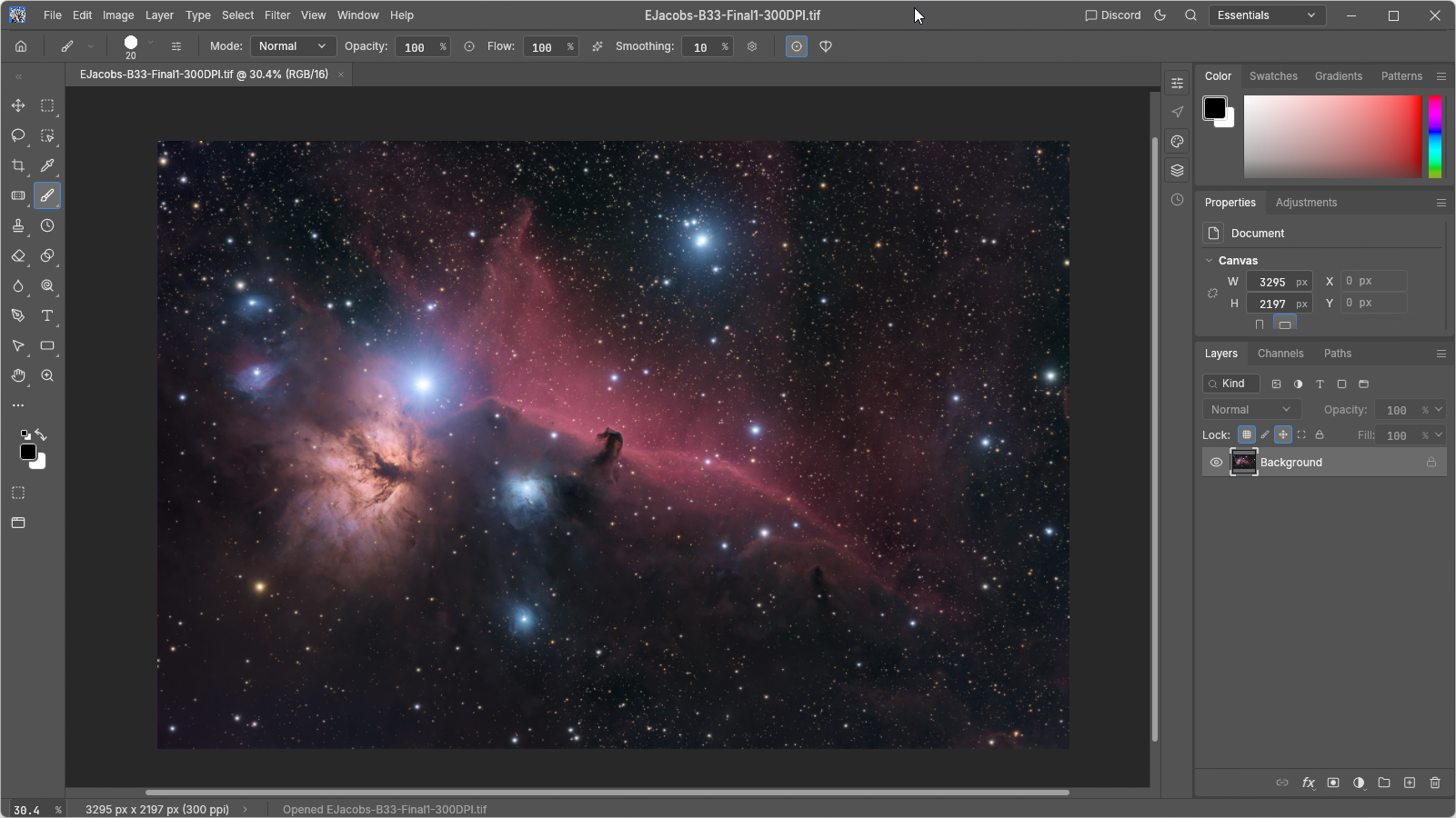
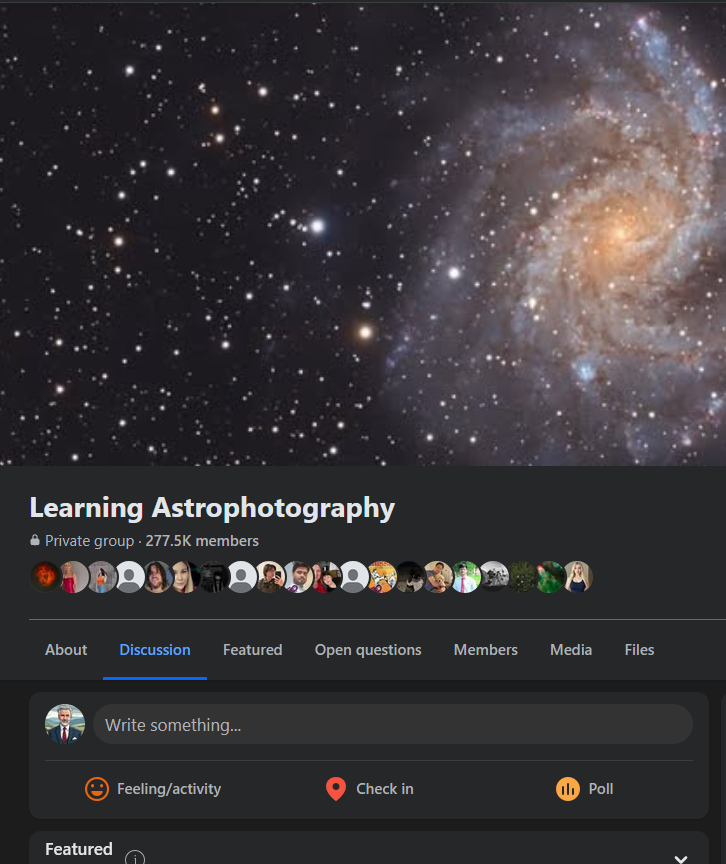
Over the past decade, Facebook groups branded around learning astrophotography have grown rapidly. Names like “Learn Astrophotography” suggest an environment built around instruction, mentorship, and shared knowledge. What these groups often deliver instead is an endless stream of finished images, posted in rapid succession, with little explanation and even less educational value. The original intent of fostering learning has been overshadowed by a culture that prioritizes visibility, engagement, and validation.
Algorithm-Driven Content: Why Images Dominate
The structure of Facebook itself plays a significant role in this transformation. The platform rewards content that generates immediate reactions, and in astrophotography, nothing captures attention faster than a visually striking image of a nebula or galaxy. A technically detailed post about Polar Alignment errors or calibration frame theory simply cannot compete with a vibrant, high-contrast image scrolling past in someone’s feed. As a result, the algorithm promotes what is visually appealing rather than what is educationally useful.
How the Algorithm Reshapes Community Behavior
This dynamic gradually reshapes the behavior of the community. Users who might otherwise share detailed workflows or explain their techniques begin to simplify their posts or stop sharing entirely, realizing that in-depth content receives little engagement. Newer members, observing what gets attention, follow suit. They post images, often with minimal context, because that is what the environment rewards. Over time, the group becomes less about learning and more about showcasing.
Inspiration Without Instruction
For beginners, this creates a deceptive experience. At first glance, the group appears vibrant and active. There is no shortage of content, and the sheer volume of images can be inspiring. But inspiration without instruction quickly becomes frustration. A newcomer sees stunning results but has no clear path to achieving them. The gap between their own early attempts and the polished images flooding the group feels enormous, and without guidance, it remains unexplained.
The Missing Context Problem
The lack of context is particularly damaging. Astrophotography is not a hobby where results can be easily reverse-engineered from a final image. Every image is the product of dozens of decisions involving equipment, exposure settings, environmental conditions, and processing techniques. When users post images without detailing these factors, they are effectively withholding the most important part of the process. The result is content that looks impressive but teaches nothing.
The Rise of Validation Culture
Compounding this issue is the rise of what can be described as validation culture. Many posts are framed not as opportunities for critique or discussion, but as bids for approval. Phrases like “First attempt” or “What do you think?” dominate, and responses often consist of brief compliments rather than constructive feedback. While encouragement has its place, an environment that avoids honest critique ultimately hinders growth. Beginners are not given the tools to improve, and more experienced users are discouraged from offering deeper insights that might challenge or refine someone’s approach.
When Positivity Replaces Progress
This shift toward validation over education also affects the tone of interactions. In spaces where praise is expected, constructive criticism can be perceived as negativity. As a result, meaningful discussions about technique, errors, or improvements become rare. The community begins to self-regulate in a way that prioritizes positivity over accuracy, creating an atmosphere where learning takes a back seat to affirmation.
Forums Like Cloudy Nights: A Different Kind of Decline
While Facebook groups represent one side of the problem, traditional forums such as Cloudy Nights present another. These forums were once regarded as invaluable resources, filled with detailed discussions and contributions from highly knowledgeable individuals. Much of that legacy still exists in archived threads, which remain a treasure trove of information for those willing to dig. However, the current state of many forum discussions reflects a different reality.
The Signal-to-Noise Problem in Forums
One of the primary issues in forum environments is the gradual accumulation of low-value posts. Threads that begin with a genuine question or a technical discussion can quickly become diluted as more users contribute brief, repetitive, or tangential responses. In some cases, users appear more interested in participating for the sake of visibility than in providing meaningful assistance. The structure of forums, which often tracks post counts or user activity, can unintentionally incentivize quantity over quality.
Long Threads, Little Value
This phenomenon leads to threads that are long but not necessarily informative. A beginner searching for answers may find themselves navigating through pages of content, only to extract a handful of useful insights. The signal-to-noise ratio becomes increasingly unfavorable, and the effort required to find reliable information grows correspondingly.
Entrenched Opinions and Conflicting Advice
Another challenge within forums is the presence of entrenched perspectives. Long-time users, while often experienced, may hold strong opinions about equipment, techniques, or approaches that are not universally applicable. For newcomers, distinguishing between subjective preference and objective advice can be difficult. When differing viewpoints are presented without context, the result is confusion rather than clarity.
A Discouraging Tone for Beginners
Additionally, the tone of some forum interactions can be discouraging. Beginners asking basic questions may encounter responses that are dismissive or overly critical. While not representative of all users, these interactions leave a lasting impression. A single negative experience can be enough to deter someone from engaging further, effectively cutting them off from potential learning opportunities.
Information That Exists—but Is Hard to Access
The cumulative effect of these issues is an environment that is technically rich but practically inaccessible. The information exists, but it is buried beneath layers of noise, inconsistency, and social dynamics that make it difficult to navigate. For someone new to astrophotography, this can feel overwhelming, leading to a sense that the hobby is more complicated or exclusive than it actually is.
Monetized Content and the Illusion of Learning
Beyond social platforms and forums, another layer of complexity emerges in the form of monetized content. As astrophotography has grown in popularity, so too has the ecosystem of websites, courses, and content creators seeking to capitalize on that interest. In principle, there is nothing inherently wrong with monetization. High-quality educational content requires time and effort to produce, and creators deserve to be compensated for their work. The problem arises when the pursuit of profit takes precedence over the quality and accessibility of information.
Paywalls, Fragmentation, and Repackaged Basics
Some websites and platforms present themselves as comprehensive learning resources but offer little more than repackaged basics. Content is often fragmented, requiring users to navigate multiple pages or videos to piece together a coherent understanding. In some cases, essential information is placed behind paywalls, creating a barrier for beginners who are still exploring the hobby and may not be ready to invest financially.
Affiliate Marketing and Gear Bias
Affiliate marketing further complicates the landscape. Recommendations for equipment are sometimes influenced more by potential commissions than by genuine suitability for beginners. This can lead to guidance that is skewed toward higher-end gear, reinforcing the misconception that astrophotography requires significant financial investment to get started. For newcomers, this creates an additional layer of confusion, as they struggle to differentiate between marketing and mentorship.
A Fragmented Learning Experience
The combined effect of these trends is a fragmented learning environment. Beginners are exposed to a mix of image-driven social media, noisy forums, and monetized content, none of which provide a clear, structured pathway into the hobby. Instead of building a solid foundation, they are left to piece together information from disparate sources, often encountering contradictions along the way.
The Need for Structured Learning
Astrophotography, by its nature, benefits from a structured approach to learning. Concepts build upon one another, and a clear understanding of fundamentals is essential for progress. Without this structure, beginners may find themselves repeating mistakes, misinterpreting results, or investing in equipment that does not align with their goals. The absence of cohesive guidance turns what could be a rewarding journey into a process of trial and error.
Communities as Supplementary Tools, Not Classrooms
It is important to recognize that the issue is not the existence of these platforms, but the way they are used and perceived. Facebook groups, forums, and content websites all have the potential to be valuable resources. They offer access to a wide range of experiences, perspectives, and expertise. The problem arises when they are treated as primary sources of education rather than supplementary tools.
For those entering the field of astrophotography, a shift in expectations is necessary. Online communities can provide inspiration, exposure to different techniques, and occasional insights. However, they should not be relied upon as the sole means of learning. A more effective approach involves seeking out structured resources, whether in the form of comprehensive guides, books, or well-organized tutorials, and using community platforms to complement that foundation.
Can These Communities Improve?
At the same time, there is an opportunity for these communities to evolve. Encouraging more detailed posts, fostering a culture of constructive critique, and prioritizing educational content over engagement metrics could help restore some of their original purpose. This would require both platform-level changes and a collective shift in user behavior, neither of which is easy to achieve. Yet without such changes, the gap between what these communities promise and what they deliver will continue to widen.
Conclusion: Inspiration Is Not Education
Ultimately, the challenge facing online astrophotography communities is one of balance. The visual nature of the hobby will always lend itself to image sharing, and there is undeniable value in celebrating the results of one’s efforts. But without a corresponding emphasis on process, technique, and learning, these spaces risk becoming superficial. They may inspire, but they will not educate.
For beginners, recognizing this distinction is crucial. The images that fill their screens are not roadmaps, and the communities that showcase them are not classrooms. Real learning requires depth, context, and a willingness to engage with the underlying principles of the craft. Until online spaces consistently provide those elements, they will remain, at best, partial solutions to a much larger educational need.